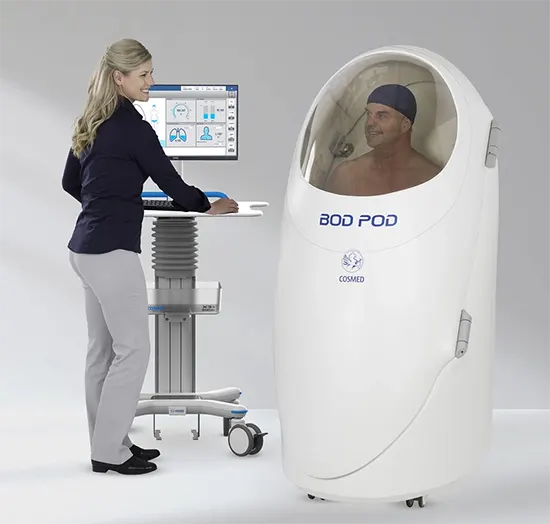
Over the years a number of methods have been developed to measure body composition. Until the BOD POD, all of these methods had drawbacks, such as being inaccurate, messy, difficult, requiring extensive training, or invasive.
In measuring body composition, it's not only important what the result is, but also how you arrived at it. For example, let's say you're a woman with a skinfold or bioelectric impedance body fat measurement of 22%. At first glance it seems that you fall into a healthy body fat range. The problem is, since the error factor for both of these methods is up to +/-8%, this number could mean your actual body fat might be as low as 14% (risky – low body fat) or as high as 30% (borderline excess fat). Inaccurate information like this is no better than no information at all, and can be downright dangerous if being used to determine an appropriate diet and/or training program. This is why it’s so important to receive an accurate body composition assessment. It’s the only way to get the proper information necessary for making sensible decisions regarding nutrition and fitness programs.
| Accuracy | Speed | Safety | Populations* | |
| BOD POD | | | | |
| Hydrostatic Weighing | | | | |
| Dual Energy X-ray Absorptiometry (DXA) | | | | |
| Bioelectric Impedance | | | | |
| Skinfold Calipers | | | | |
| Body Mass Index (BMI) | | | | |
*Populations – refers to the ability of the method to assess body composition among a wide range of populations, including the elderly, obese, children, and those with disabilities.